
Treasury Secretary Says Americans Could Save $2,000 Tariff Dividend Payment

‘My prediction is, the first quarter, second quarter, what we’re going to see is we have brought the inflation down’, Bessent said.
Published: 11/19/2025, 12:20:18 PM EST
Treasury Secretary Says Americans Could Save $2,000 Tariff Dividend Payment
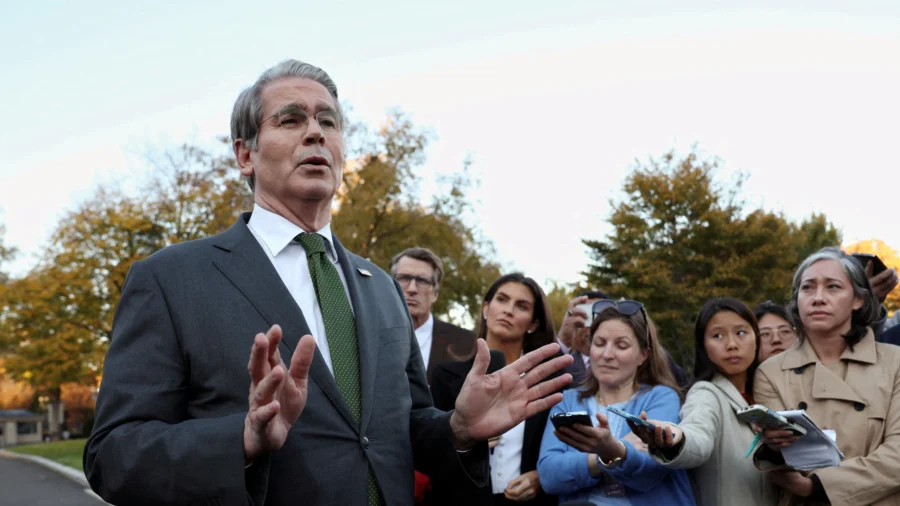
U.S. Treasury Secretary Scott Bessent speaks to reporters at the White House on Nov. 5, 2025. (Kevin Lamarque/Reuters)

Treasury Secretary Scott Bessent suggested on Nov. 18 that Americans could place into savings their $2,000 tariff-related payment proposed by President Donald Trump.

Asked during an interview by Fox News anchor Bret Baier about inflation concerns in relation to the $2,000 tariff dividends, Bessent said, “There are a lot of things that are gonna happen next year … and that could be one of them.”

Earlier this month, President Donald Trump floated the idea on social media that his administration could use some revenues generated by tariffs to send $2,000 payments to moderate- to low-income Americans. The president told reporters on Nov. 17 that those payments could be issued after the middle of 2026.

“Maybe we could persuade Americans to save that [payment],” Bessent told Baier.

Bessent then said that “one of the things that’s going to happen next year is the Trump accounts,” adding that “every child who was born from January 1st for the next three years is going to get a government account that goes into the stock market.”

The Trump accounts that the secretary was referring to are savings accounts introduced under the One Big Beautiful Bill Act that was backed by Trump and congressional Republicans and signed into law by the president over the summer.
The accounts would receive an initial $1,000 from the Treasury Department, while parents would be able to contribute up to $5,000 per year, according to the White House.

“So every American child born for the next three years, starting January 1st, is gonna have that,” Bessent said. “They can take it out when they’re 18. They’re going to learn the power of compounding, and there’s going to be a lot of financial literacy around that.”
A National Bureau of Economic Research paper found that 42 percent of the 2020 CARES Act stimulus checks that were sent out under the first Trump administration were spent. Another 27 percent was saved, with the remaining 31 percent used to pay off debt. The spending included food, health, beauty aids, household products, durable goods, health care, and other consumer spending, it found.
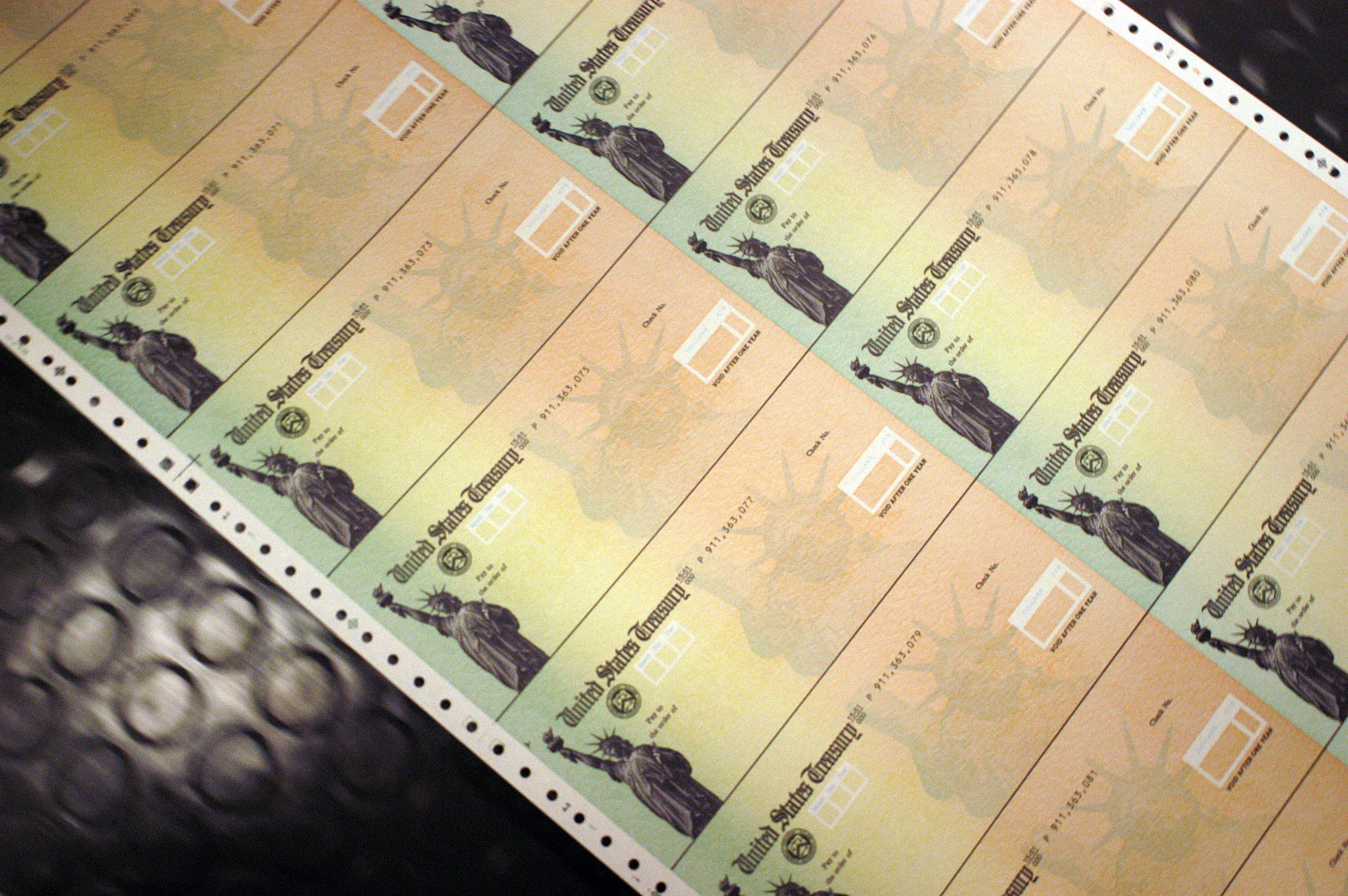
Blank Social Security checks are run through a printer at the U.S. Treasury printing facility in Philadelphia, Pennsylvania, on Feb. 11, 2005. (William Thomas Cain/Getty Images)
Blank Social Security checks are run through a printer at the U.S. Treasury printing facility in Philadelphia, Pennsylvania, on Feb. 11, 2005. William Thomas Cain/Getty Images
Officials in the Trump administration, including Bessent, have said that sending $2,000 payments derived from tariff revenue would need congressional action. The Trump administration has yet to officially propose a bill, although Sen. Josh Hawley (R-Mo.) earlier this year had proposed a tariff payment of $600.

During the interview, Bessent also made reference to concerns over the increasing cost of living in the United States by saying that “demand shock and supply constraint” under the previous administration led to relatively high inflation over the past several years.

“My prediction is, the first quarter, second quarter, what we’re going to see is we have brought the inflation down, it is curving down, and real income, the other side of that equation is real income growth, and we are going to see this from all this investment,” the treasury secretary said, referring to the administration’s economic policies and other countries having invested in the United States.