

Trump Administration Ends Taxpayer-Funded Education for Illegal Immigrants

The impacted programs include career and technical education programs under the Carl D. Perkins Career and Technical Education Act and adult education programs under Title II of the Adult Education and Family Literacy Act.
Published: 7/10/2025, 1:43:37 PM EDT
Trump Administration Ends Taxpayer-Funded Education for Illegal Immigrants
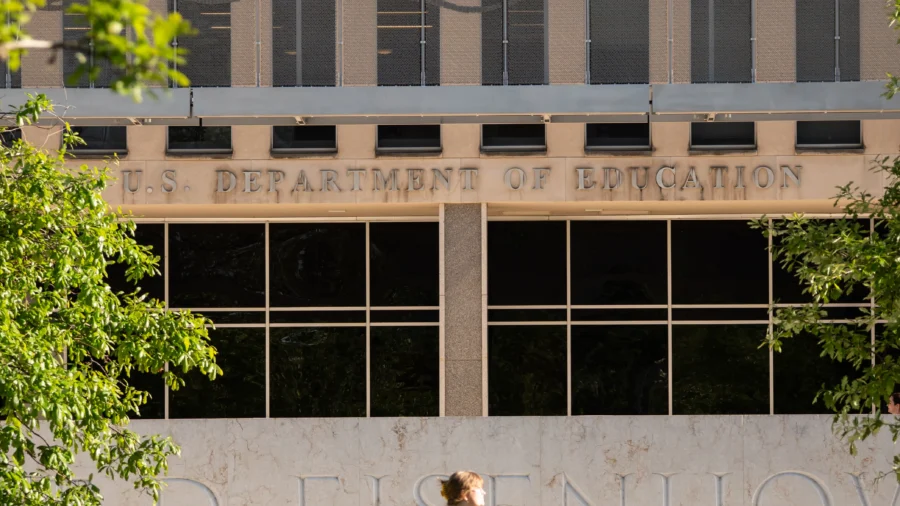
The Department of Education in Washington on April 28, 2025. (Madalina Vasiliu/The Epoch Times)

Illegal aliens will no longer be eligible to receive taxpayer-subsidized education, the Trump administration announced on Thursday.

The Department of Education confirmed that it revoked a Clinton-era interpretation of a rule that allowed undocumented individuals to access taxpayer funds for career, technical, and adult education programs.

"Under President Donald Trump's leadership, hardworking Americans won’t have to foot the bill for education programs that should be reserved for legal residents," Education Secretary Linda McMahon wrote on X.  “Postsecondary education programs funded by the federal government should benefit American citizens, not illegal aliens."

The impacted programs include career and technical education programs under the Carl D. Perkins Career and Technical Education Act and adult education programs under Title II of the Adult Education and Family Literacy Act.

Thursday's move by the Trump administration also reinforces that Pell Grants and student loans that fall under Higher Education Act programs remain inaccessible to illegal aliens.

In a statement, the Department of Education explained that Title IV of the Personal Responsibility and Work Opportunity Reconciliation Act (PRWORA) generally limits the use of federal public benefits mostly to American citizens, permanent residents, and certain individuals deemed “qualified aliens.”

According to the agency, however, the Clinton Administration in 1997 mischaracterized the law and "erroneously" exempted career, technical, and adult education programs from being subject to PRWORA. "Congress made no such distinction in PRWORA."

Trump signed an executive order on Feb. 19 that specifically cited PRWORA, asserting that previous administrations over the decades undermined its principles and limitations.

"Over the last 4 years, in particular, the prior administration repeatedly undercut the goals of that law, resulting in the improper expenditure of significant taxpayer resources," Trump stated. "My Administration will uphold the rule of law, defend against the waste of hard-earned taxpayer resources, and protect benefits for American citizens in need, including individuals with disabilities and veterans."

Trump directed the heads of federal agencies to ensure that taxpayer-subsidized benefits apply only to qualified individuals.

The White House in a statement, described the move as "common sense" and said it was long overdue.

Moving forward, the Department of Education said it will send letters to all affected grantees discussing eligibility verification.

Thursday's action represents only some efforts by the Trump administration to prioritize American citizens over illegal immigrants in higher education.

Last month, Texas ended its policy that offered in-state tuition rates for illegal aliens. Its shift in policy followed a lawsuit launched by the Department of Justice (DOJ) that accused the state of discriminating against out-of-state American students by offering in-state tuition rates to undocumented immigrants.

In another lawsuit, the DOJ challenged Kentucky over a similar policy.

“No state can be allowed to treat Americans like second-class citizens in their own country by offering financial benefits to illegal aliens,” Attorney General Pamela Bondi said in a statement. “The Department of Justice just won on this exact issue in Texas, and we look forward to fighting in Kentucky to protect the rights of American citizens.”

Kentucky Gov. Andy Beshear was named in the lawsuit, but his office maintained that it doesn't have the authority to change the regulations set by the Kentucky Council on Postsecondary Education, the panel that determines student residency for tuition purposes.