


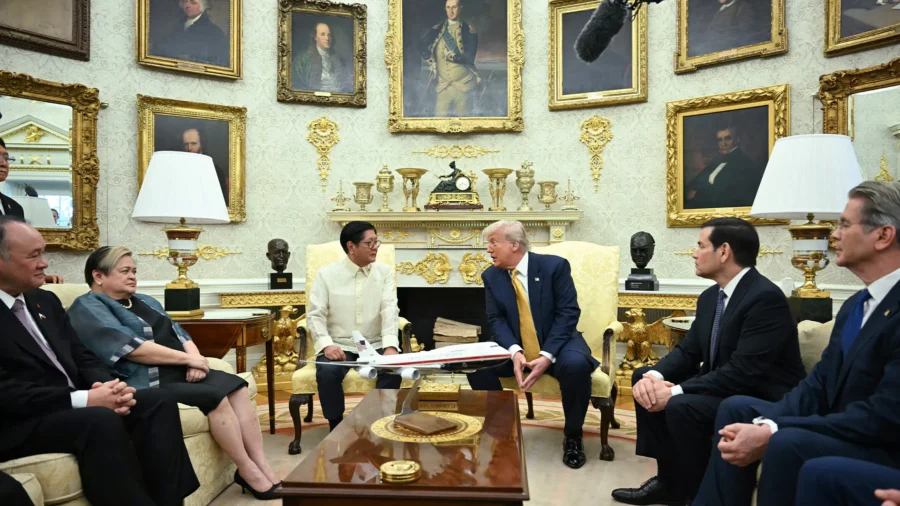
The United States has reached trade agreements with Indonesia and the Philippines, U.S. President Donald Trump announced on social media.
With the Aug. 1 deadline approaching, the administration is reaching new deals.
First, following through on last week's announcement, Trump confirmed the details of the U.S.–Indonesia trade agreement.
Terms of the deal would see Indonesia lower tariffs to zero percent on 99 percent of U.S. exports and eliminate non-tariff barriers, the president said in a July 22 Truth Social post.
Indonesian products entering the United States would be subject to a reciprocal tariff rate of 19 percent, down from the previously announced blanket rate of 32 percent.
Indonesia will also supply the United States with precious critical minerals and purchase American farm products, energy, and Boeing aircraft.
"This deal is a huge win for our automakers, tech companies, workers, farmers, ranchers, and manufacturers," Trump said.
It also removes import restrictions and licensing agreements and establishes measures to resolve long-standing intellectual property issues. The two sides will further finalize commitments on digital trade, services, and investment.
Indonesia will, as part of the trade deal, implement a ban on forced labor imports and eliminate rules that restrict workers' and unions' freedom of association and collective bargaining rights.
The U.S.–Indonesian trade agreement is projected to be worth approximately $50 billion to the United States, the White House confirmed.
Leaders from Indonesia agreed to several significant commitments, including the removal of pre-shipment inspections, exemption from local content requirements for U.S. firms, and acceptance of U.S. federal motor vehicle safety standards.
Additionally, the deal will include transshipment rules to ensure that China does not exploit the agreement’s benefits.
According to the White House, transshipped goods with high levels of content from nations with higher tariff rates would face a 40 percent levy.
If Indonesia does not adhere to the agreement's conditions, U.S. officials say, the president possesses the authority to modify the deal, including tariffs.
Senior administration officials say that the deal aims to strike a balance in trade and enhance U.S. access to the Indonesian market.
"We're trying to improve the terms of trade so we can eliminate the trade deficit," they told reporters on a press call.
US Finalizing Deal With the Philippines
The latest details of the U.S.–Indonesia trade agreement come as Trump confirmed that the Philippines is next in line to finalize a deal."It was a great honor to be with the president. He is highly respected in his country, as he should be. He is also a very good, and tough, negotiator. We extend our warmest regards to the wonderful people of the Philippines!" Trump wrote on his social media platform.
Next Up: China
Meanwhile, Treasury Secretary Scott Bessent stated on July 22 that the Aug. 12 trade deadline with China is likely to be extended.“So I think we’ve actually moved to a new level with China, where it’s very constructive,” he continued. “We’re going to be able to get a lot of things done, now that trade has kind of settled in at a good level.”
Bessent also noted that the administration wants to discuss sanctioned Iranian and Russian crude oil and slow the “glut of manufacturing that they’re doing and concentrate on building a consumer economy.”
Bigger economies “will either open themselves up or they'll pay a fair tariff to America," Lutnick said.
He noted that Aug. 1 was a hard deadline.