


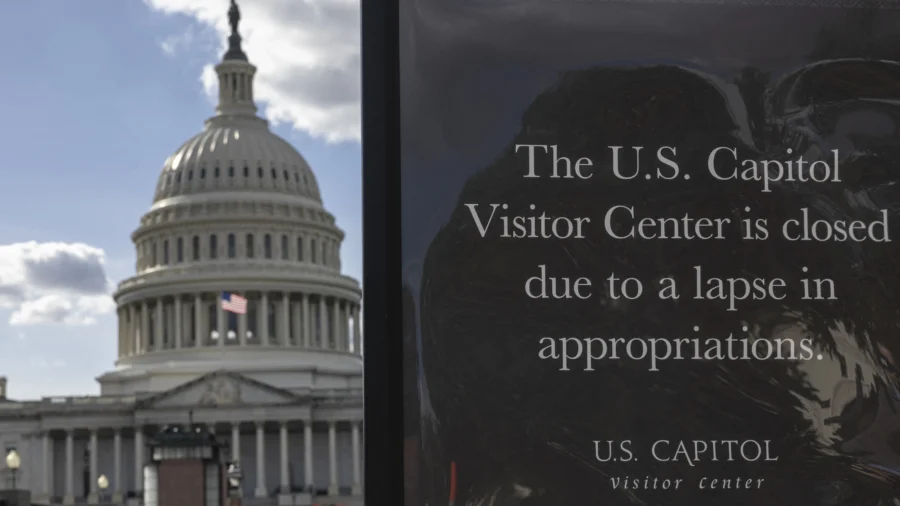
The political messaging war continues as the government shutdown reached its second day. The White House signaled that certain government agencies will be cut.
President Donald Trump said he was meeting with his budget director Russell Vought on Thursday to determine which "Democrat Agencies" to cut.
Trump has already frozen federal transit and green-energy funding for Democratic-leaning states and has threatened to fire more federal workers during the shutdown, which began on Wednesday due to a partisan standoff in Congress.
Trump is already on track to push out 300,000 federal workers by the end of the year.
White House spokeswoman Karoline Leavitt said Trump could fire thousands of workers, though she did not provide details. Several federal employee unions have filed a lawsuit to prevent that from happening, but federal courts have allowed layoffs to proceed while similar cases are being litigated.
The government shutdown, the 15th since 1981, has suspended scientific research, financial oversight, economic data reports, and a wide range of other activities. Major benefit programs, like Social Security, will continue to send out payments.
2 Million Workers' Pay Suspended
Pay has been suspended for roughly 2 million federal workers, with roughly 750,000 ordered not to work and others, such as troops and Border Patrol agents, required to work without pay. Many could face personal hardship if the standoff is not resolved before Oct. 15, when the next paychecks are due to be issued.A prolonged shutdown could disrupt air travel, threaten food aid for millions of Americans, and weigh on exports and mortgage applications.
However, past shutdowns have not had a lasting impact on the broader U.S. economy. The longest lasted 35 days in 2018 and 2019, during Trump's first term, due to a dispute over immigration.
The shutdown was triggered at midnight Tuesday, when Democrats and Republicans were unable to agree on a spending bill that would have allowed agency operations to continue past October 1, the start of the new fiscal year. Democrats insist that any funding bill must also extend health subsidies that are due to expire at the end of the year, while Republicans say the two issues must be dealt with separately.
The shutdown will persist at least until Friday, when the Senate next convenes to address the issue. Republicans hold majorities in both chambers of Congress but Senate rules mean they will need the votes of at least seven Democrats to pass a funding bill.