


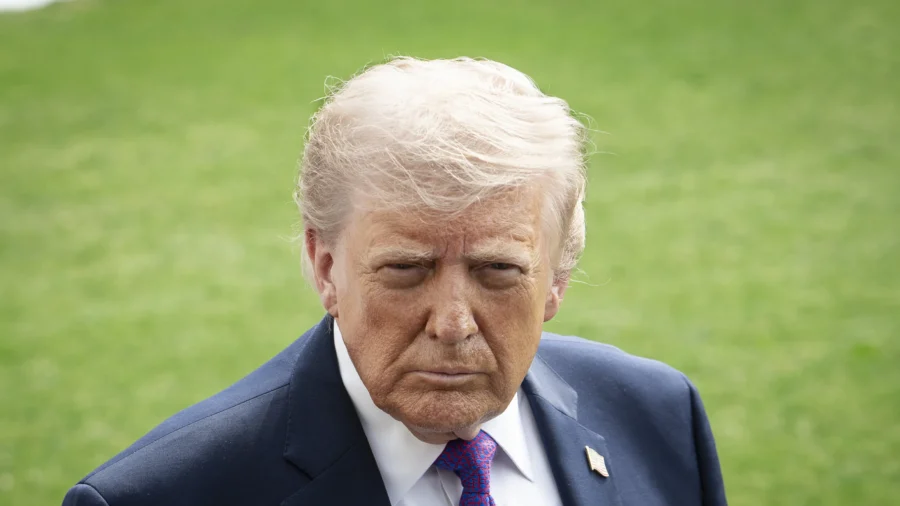
U.S. President Donald Trump was not satisfied with how the Iranian regime has managed passage through the Strait of Hormuz since the countries agreed on a two-week ceasefire.
“Iran is doing a very poor job, dishonorable some would say, of allowing Oil to go through the Strait of Hormuz,” Trump wrote in a Truth Social post on April 9.
“That is not the agreement we have!”
In a separate post on Truth Social, the president criticized Iran for unconfirmed reports that the regime was charging ships a fee to pass through the crucial waterway.
“There are reports that Iran is charging fees to tankers going through the Hormuz Strait—They better not be and, if they are, they better stop now!” Trump wrote.
Fees were not imposed on shipping vessels before the U.S. and Israel launched Operation Epic Fury against the Iranian regime on Feb. 28.
“We have to bring together a coalition of countries which is able collectively to make sure that the principle of free shipping or free travel on our seas … is upheld,” Rutte said on Thursday.
The Epoch Times reached out to Iranian Foreign Minister Abbas Araghchi for comment.
U.S. Vice President JD Vance and special envoys Steve Witkoff and Jared Kushner are scheduled to have talks with Iranian representatives starting April 11.
Trump suggested that Iranian officials “talk much differently when you’re at a meeting than they do to the press. They’re much more reasonable.”
Between April 8 and the morning of April 9, only seven ships passed through the Strait of Hormuz, which is a fraction of the 140 ships that normally would pass, according to ship-tracking data.
Hundreds of tankers and ships have been stuck in the Persian Gulf since late February due to the Iran conflict.
The lack of shipments passing through has caused oil and gas prices across the globe to rise.
As of 8:30 p.m. ET, the price for crude oil sat at $98.
The average price for a gallon of regular gas in the United States averaged $4.16, which is more than one dollar more than what it was before the war started, according to the American Automobile Association.