


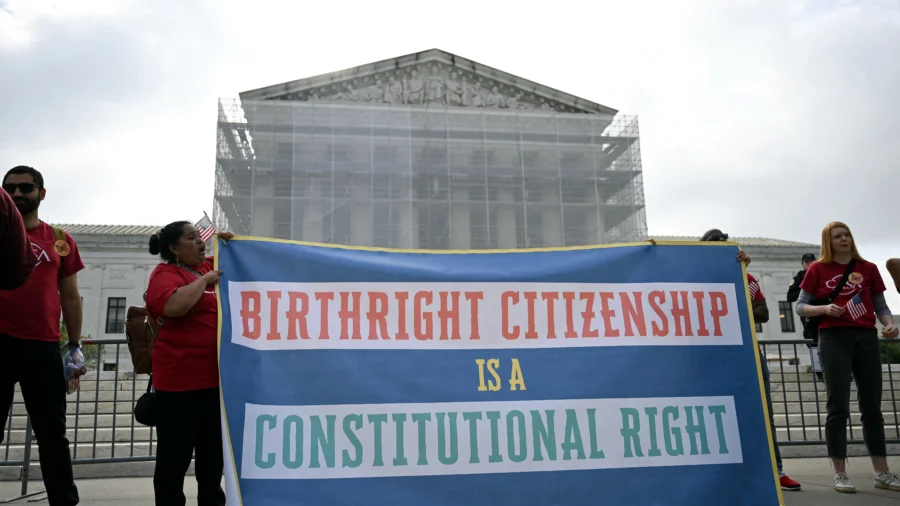
President Donald Trump shared his first reaction after attending the Supreme Court’s oral arguments on birthright citizenship Wednesday morning, expressing frustration after conservative and liberal justices appeared to cast doubt on his efforts to limit the constitutional guarantee.
Trump sat in the first row of the public gallery, becoming the first sitting president to observe an oral argument at the Supreme Court.
The citizenship clause of the 14th Amendment states that anyone born or naturalized in the United States is generally an American citizen.
The nation's highest court, which has a 6-3 conservative majority, heard more than two hours of arguments in the Trump administration's appeal of a lower court's decision that blocked the executive order to restrict the constitutional guarantee.
U.S. Solicitor General D. John Sauer reiterated Trump's stance that the 14th Amendment has never been interpreted to extend citizenship universally, adding that unrestricted birthright citizenship contradicts the policies of any modern nation.
"It operates as a powerful pull factor for illegal immigration and rewards illegal aliens who not only violate the immigration laws but also jump in front of those who follow the rules," Sauer said.
Chief Justice John Roberts suggested that Sauer was relying on "quirky" exceptions to citizenship to make a broad argument about individuals who are in the country illegally, saying: “I’m not quite sure how you can get to that big group from such tiny and sort of idiosyncratic examples."
American Civil Liberties Union attorney Cecillia Wang argued that Trump's executive order was unlawful and stressed that birthright citizenship is enshrined in the 14th Amendment.
Justice Clarence Thomas, during oral arguments, sounded the most likely among the justices to side with the president on the issue.
“How much of the debates around the 14th Amendment had anything to do with immigration?” Thomas asked, noting that the initial purpose of the act was actually to grant citizenship to black people, including freed slaves.
The justices are expected to announce their decision by the end of the term in June.