


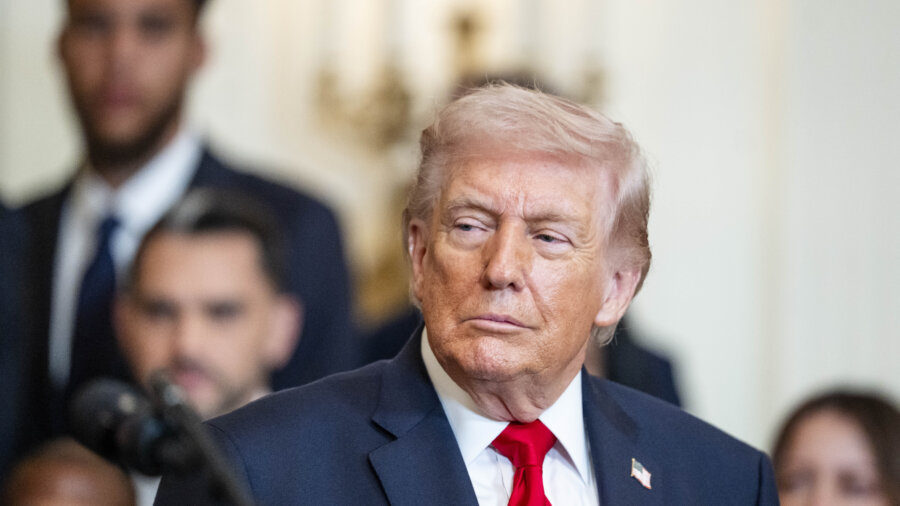
President Donald Trump signed an executive order on March 6 aimed at combating transnational criminal organizations that are engaged in cybercrime and predatory schemes against Americans.
“Cybercrime, fraud, and predatory schemes are draining American families of their life savings, stealing the benefits of years of work, and destroying the lives of our youth,” Trump said in his order.
Under the order, relevant officials are required to conduct a review to determine how operational, technical, diplomatic, and regulatory tools can be improved to counter transnational criminal organizations behind cybercrime.
The directive calls for an action plan identifying transnational criminal organizations responsible for scam centers and cybercrime and outlining measures to prevent and dismantle their operations, including creating a dedicated operational cell within the National Coordination Center (NCC).
Trump also directed the U.S. attorney general to prioritize prosecutions of defendants engaged in cyber-enabled fraud, pursuing “the most serious, provable offenses by such fraudulent schemes,” and to submit recommendations on establishing a program to return seized or forfeited funds directly to victims.
In addition, the order instructs the secretary of homeland security to partner with the NCC to provide training and technical assistance to state and local partners in responding to cyber threats.
It also directs the secretary of state to engage with foreign governments and demand enforcement action against transnational criminal organizations operating in their countries.
American consumers reported more than $12.5 billion in losses from “cyber-enabled fraud” in 2024, with senior citizens experiencing the most losses on average, according to the White House.
The administration aims to dismantle adversary networks and impose sanctions on “lawless foreign hacking companies,” while also easing regulations on industry partners to allow innovation in emerging technologies, according to the document.
The strategy also calls for the implementation of “AI-enabled cyber tools” that will help to detect, divert, and deceive threat actors.
“We will rapidly adopt and promote agentic AI in ways that securely scale network defense and disruption,” it stated. “Through cyber diplomacy, we will ensure that AI—particularly generative AI and agentic AI—advances innovation and global stability.”