


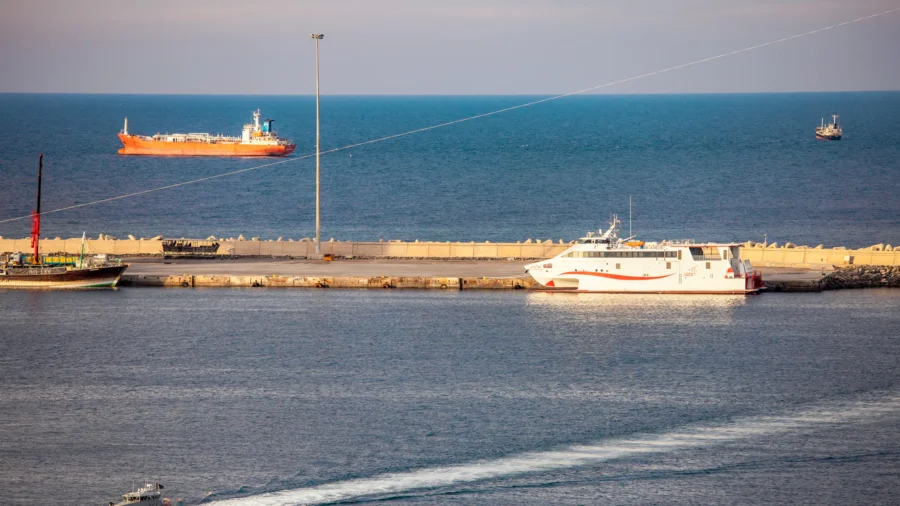
The U.S. military said on Saturday that it had started “setting conditions" for clearing mines in the Strait of Hormuz, with two U.S. warships passing through the key waterway.
In a post on X, the U.S. Central Command said the USS Frank Peterson and USS Michael Murphy transited the Strait of Hormuz "as part of a broader mission to ensure the strait is fully clear of sea mines previously laid by Iran’s Islamic Revolutionary Guards Corps."
"Today, we began the process of establishing a new passage and we will share this safe pathway with the maritime industry soon to encourage the free flow of commerce," Admiral Brad Cooper, the head of Central Command, said in a statement.
Earlier on Saturday, President Donald Trump said that the United States has begun "clearing" the Strait of Hormuz to help reopen the flow of oil out of the Persian Gulf following weeks of conflict with Iran.
Shortly before Trump's statement on social media, reports had emerged about the presence of U.S. naval ships in the strait.
Fear of Iranian attacks on shipping through the strait over the past several weeks effectively closed the shipping route, which serves as a critical waterway for global oil supplies. This has disrupted global energy markets by inhibiting the transport of oil from major producers, such as Saudi Arabia, Iraq, and Iran. Gasoline prices in the U.S. have increased during the conflict, although most of the oil that travels through the Strait of Hormuz does not go to the U.S.
Traffic through the strait has remained a major point of contention in ongoing talks. Trump has accused Tehran of violating the conditions of a ceasefire and doing a bad job of reopening the strait.
Pakistan has been mediating negotiations between the U.S. and Iran. Vice President JD Vance recently met with Pakistan Prime Minister Shehbaz Sharif, who later relayed U.S. demands with top Iranian officials.