


The U.S. economy registered a solid rebound in the first quarter after a disappointing end to 2025, new government data released on April 30 show.
First-quarter gross domestic product (GDP) growth was 2 percent, up from the 0.5 percent reading in the fourth quarter, according to the Bureau of Economic Analysis.
Prior to the release, the Atlanta Federal Reserve’s GDPNow Model indicated growth would be around 1 percent.
The consensus forecast suggested a 2.3 percent expansion.
Consumer spending, net exports, and private investments contributed to the January–March growth rate.
Consumers continued to open their wallets, with spending up 1.6 percent. The public has contended with a series of headwinds, from higher gasoline prices to the severe winter storm, but this may have been offset by the 11 percent increase in tax refunds.
Exports rose by almost 13 percent, driven almost entirely by shipments of goods.
Government consumption jumped more than 4 percent after declining nearly 6 percent in the October–December span due to the record-breaking spending impasse that shut down the federal government.
Gross private domestic investment advanced close to 9 percent, with the artificial intelligence (AI) buildout continuing to support economic growth.
On the inflation front, the GDP Price Index—a measure of prices for goods and services manufactured in the United States—rose 4.5 percent, higher than expected.
The first-quarter GDP figures come after the bureau also reported that inflation in the Federal Reserve’s preferred Personal Consumption Expenditures (PCE) price index rose to 3.5 percent in March, in line with market estimates, from 2.8 percent in February.
Core PCE inflation, which omits volatile energy and food prices, ticked up to 3.2 percent from 3 percent in the previous month.
The ‘Quite Resilient’ US Economy
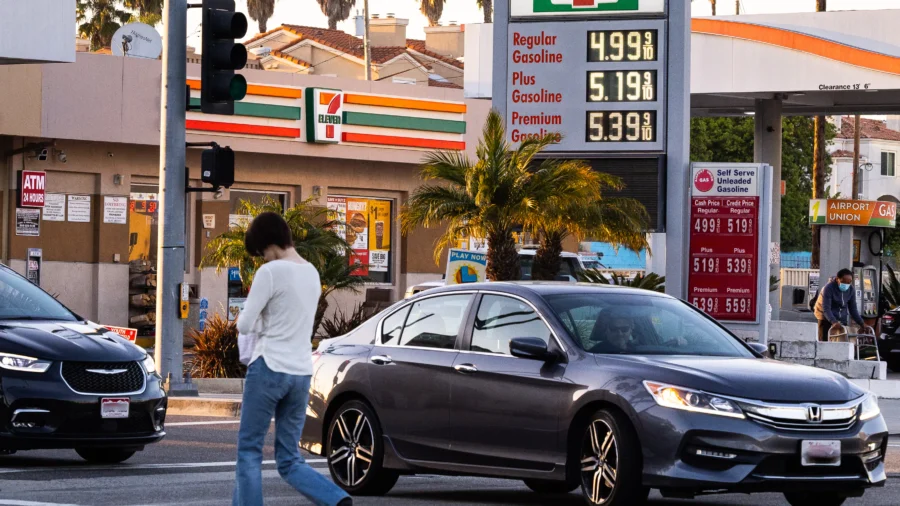
Despite the war in Iran—now approaching its 10th week—and surging gasoline prices, the U.S. economy remains “quite resilient,” says Federal Reserve Chair Jerome Powell.Recent figures suggest consumers continue to open their wallets, and business investment remains solid amid the artificial intelligence (AI) buildout.
“Growth is really solid across our economy. Some of that is that consumer spending is hanging in pretty well, the most recent data are good. And some of it is just the apparently insatiable demand for data centers all over the United States,” Powell said at the post-meeting press conference on April 29.
Consumer sentiment also rebounded in April, topping market estimates.
The Consumer Board’s Consumer Confidence Index edged higher from February’s upwardly revised reading, despite growing concerns about the pain at the pump and higher war-driven oil prices.
“Consumer appraisals of current and expected business conditions declined moderately compared to last month,” Dana Peterson, the group’s chief economist, said in a news release.
“This was offset by modest improvements in consumers’ perceptions of the labor market, both current and expected, as well as income expectations, which were slightly more optimistic in April.”

Near-term consumer inflation forecasts have also risen.
The New York Fed’s Survey of Consumer Expectations showed the year-ahead outlook climbing to 3.4 percent in March, from 3 percent in February.
Echoing Powell’s comments, it is important to look past the oil price shock’s immediate impact on inflation, said Bill Adams, chief economist at Fifth Third Commercial Bank.
“Energy price shocks are usually short-lived, and their impact on inflation usually reverses once interruptions to energy supplies go away,” Adams said in a note emailed to The Epoch Times.
For now, second-quarter GDP appears intact, with the New York Fed’s Nowcast forecasting a 2.8 percent expansion.