


On Thursday, the U.S. State Department rejected China’s warning after Chinese officials outlined four "red lines" for the newly arrived U.S. Consul General, Julie Eadeh, urging her “not to interfere” in China’s “domestic affairs.”
"U.S. diplomats represent our nation and are charged with advancing U.S. interests globally, which is standard practice for diplomats around the world including in Hong Kong," a senior State Department official said in response to comments about Eadeh.
Earlier on Thursday, Cui Jianchun, China’s top diplomat in Hong Kong, said he met Eadeh on Tuesday to “lodge solemn representations” regarding her conduct since assuming her role.
Eadeh took office in late August, succeeding Gregory May. At a consular reception she hosted, the presence of Hong Kong pro-democracy figures Anson Chan and Emily Lau among the guests drew criticism from the communist regime.
Cui's statement, published on the website, urged Eadeh to “make a clean break with anti-China forces."
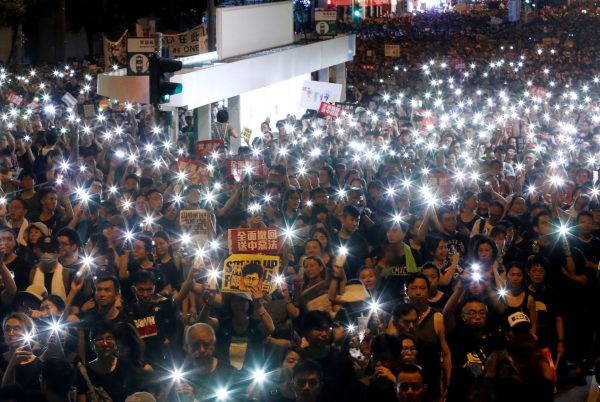
Following the Beijing-imposed National Security Law and the suppression of pro-democracy protesters, the United States denounced China’s human rights abuses in Hong Kong.
A key dispute involves pro-democracy media mogul Jimmy Lai, who faces life imprisonment for foreign collusion charges under the National Security Law.
It's not the first time Eadeh has become an eyesore for Beijing.
In 2019, she served in Hong Kong as the political unit chief. She met pro-democracy figures such as Anson Chan and Emily Lau at a consular reception, and a photo of them was amplified by pro-Beijing media, which included details about Eadeh's personal life, such as her various diplomatic postings, her husband (a fellow U.S. diplomat), and their two sons.
Washington has accused Beijing of behaving like a "thuggish regime" by allowing news outlets in Hong Kong to publish such "dangerous" reports.