

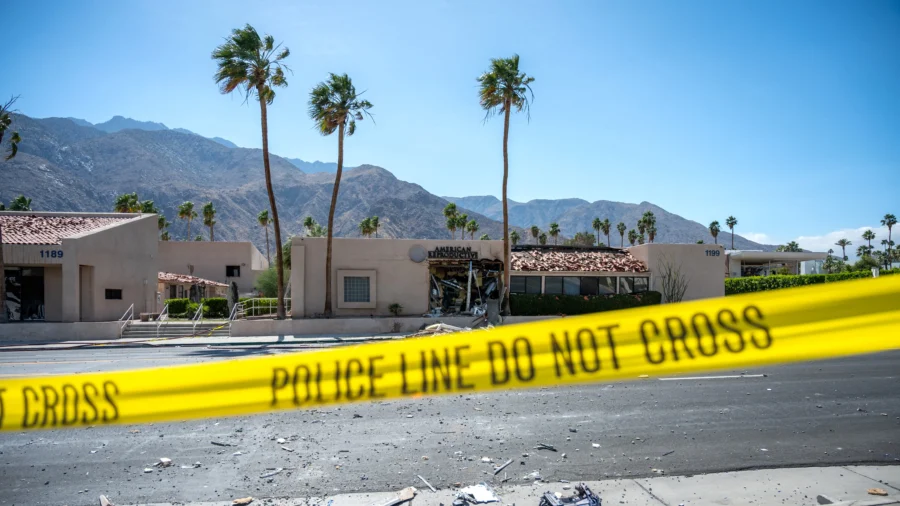
Investigators say Park and Bartkus met in online forums focused on anti-natalist beliefs, a fringe movement that opposes human procreation. Their shared ideology led them to target the American Reproductive Centers, a clinic that helps people get pregnant. Officials described the bombing as an act of domestic terrorism and said it may be the largest bomb scene ever in Southern California.
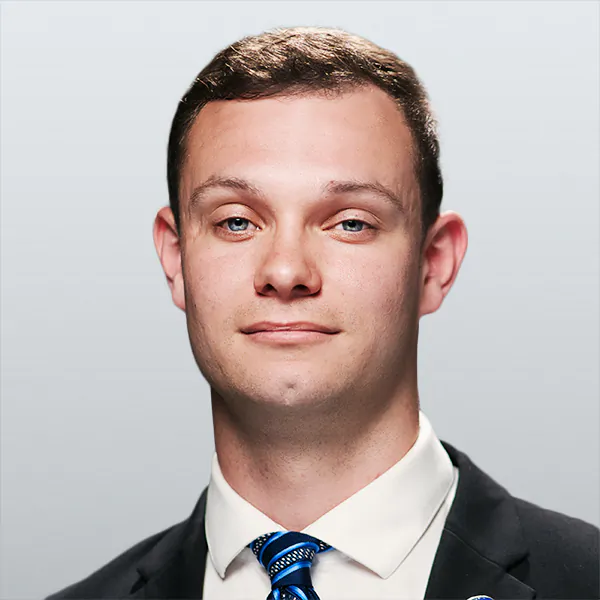
Daniel Park was arrested Tuesday at New York’s John F. Kennedy Airport after being extradited from Poland, where he fled four days after the bombing.
He appeared in federal court in Brooklyn on Wednesday and waived his right to a detention hearing in New York. Judge Cheryl Pollak ordered Park to remain in custody, calling him a serious risk. He will be sent to California for further proceedings.
Authorities searching Park’s home in Kent, Washington, found large quantities of chemicals and handwritten notes about making explosives, including a recipe similar to the one used in the 1995 Oklahoma City bombing, said Akil Davis, the FBI’s assistant director in charge.
Three days before Park visited Bartkus in January, Bartkus used an AI chat application to ask about explosives, detonation velocity, and fuel mixtures, focusing on how to create the most powerful blast. During Park’s two-week visit to Twentynine Palms, the two men experimented with bomb-making in the detached garage of Bartkus’s family home.
Family members told investigators they were aware of the experiments but did not alert authorities.
Bartkus left behind a website with audio recordings in which he explained his motives, stating, “Basically I’m anti-life. And IVF is like kind of the epitome of pro-life ideology.”
Park appeared to be active in online anti-natalist communities for nearly a decade, sometimes recruiting others to the movement, according to court papers.
Relatives told investigators that Park had made “pro-mortalist” statements since high school. In March, Park posted online seeking to meet other anti-natalists in Washington for protests or events.