


The Trump administration is confident the Supreme Court will uphold President Donald Trump’s global tariffs. However, if the White House does not prevail, there are other options, U.S. officials say.
Multiple members of the court expressed skepticism about the defense of the president's wide-ranging tariffs, which could increase the likelihood that they may be reversed.
While the 1977 law is the preferred option to enact the president’s trade agenda, Treasury Secretary Scott Bessent notes that other tools are also available.
“There are lots of other authorities that can be used, but IEEPA is by far the cleanest, and it gives the United States and the president the most negotiating authority,” he said in a Nov. 4 interview with CNBC’s "Squawk Box."
The Tariff Act of 1930
Section 338 of the Tariff Act of 1930—commonly known as the Smoot-Hawley Tariff Act—empowers the president to impose new or additional tariffs of up to 50 percent on imports entering the United States.This Depression-era authority may be exercised when a foreign nation is found to have levied excessive tariffs or erected significant non-tariff barriers against U.S. goods.
Trade Expansion Act of 1962
President John F. Kennedy signed the Trade Expansion Act into law in October 1962, establishing Section 232.This provision allows the president to impose tariffs on imports that pose a national security threat.
Trade Act of 1974
Introduced by Rep. Al Ullman (D-Ore.) and signed into law by President Gerald Ford in 1975, the Trade Act of 1974 expanded presidential power over trade negotiations and enforcement.The law established fast-track procedures, enabling the executive branch to negotiate trade agreements with greater speed and leverage, subject to streamlined congressional approval.
Officials and economic observers have concentrated on the law’s two provisions: Sections 122 and 232.
Under Section 122, the president can implement tariffs of up to 15 percent for 150 days on imports from countries running large trade surpluses.
The law also allows for limits on the volume of goods arriving from overseas markets, and does not mandate a formal probe.
To date, Section 122 has rarely, if ever, been used by presidents.
Section 301, meanwhile, grants the president sweeping authority to address unfair trade practices through a broad array of measures, including tariffs, sanctions, and other retaliatory actions.
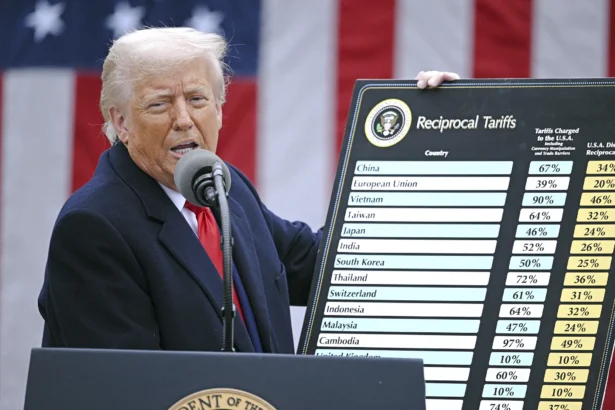
The law also empowers the U.S. trade representative to investigate foreign policies that the administration believes violate trade agreements or discriminate against U.S. commerce.
Before penalties can be imposed, however, the administration must clear two procedural hurdles.
First, the trade representative is obligated to seek a negotiated resolution with the offending country.
Setback for Trump
Before the Supreme Court hearing, Trump warned that the United States “could be reduced to almost Third World status" if his tariffs are shot down."If a president is not allowed to use Tariffs, we will be at a major disadvantage against all other Countries throughout the World, especially the 'Majors,'" Trump said in a Nov. 2 Truth Social post.
It is unclear how or when the court will rule.
The financial markets also think the Supreme Court will invalidate the International Emergency Economic Powers Act tariffs, says Tom Essaye, president and co-founder of the Sevens Research Report.
"In general, markets expect the Supreme Court to uphold the lower court ruling and invalidate the IEEPA tariffs," Essaye said in a note emailed to The Epoch Times.
"The likely market reaction to the Supreme Court overturning the tariffs is this: A short-term positive, but longer-term more mixed.
"The removal of tariffs is positive for corporate profits, so we should see a knee-jerk rally in stocks, especially retailers and industrials; however, we don’t see the removal of the IEEPA tariffs as a bullish game-changer."
At the conclusion of the oral arguments, yields on U.S. Treasury securities rose, fueled by concerns that the federal government would have to refund more than $200 billion in tariff income and potentially lose out on the projected trillions of dollars in revenue.