


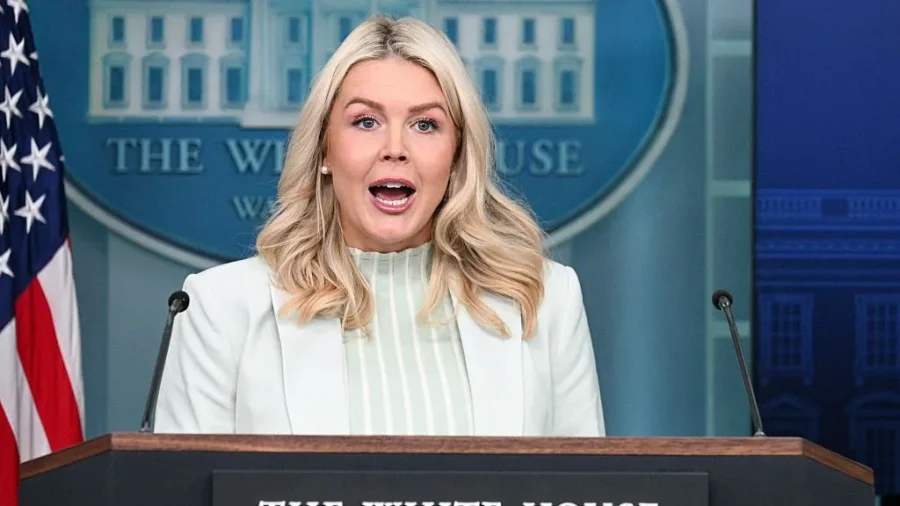
The White House has said that U.S. talks with Iran continue to remain productive, but said there's some misinformation about President Donald Trump’s 15-point ceasefire plan.
“I saw a 15-point plan that was floated in the media,” White House press secretary Karoline Leavitt told reporters in a press briefing Wednesday. “I would caution reporters in this room from reporting about speculative points or speculative plans from anonymous sources. The White House never confirmed that full plan. There are elements of truth to it, but some of these stories I read were not entirely factual."
Leavitt did not specify which parts of the plan were falsely reported and declined to provide further details about ongoing talks between the United States and Iran.
A 15-point proposal from the Trump administration offering a potential pathway to a ceasefire was offered late Tuesday to Iran through Pakistan. When pressed on the White House’s response to Iran’s rejection of the plan, Leavitt said that negotiations are ongoing.
It remains unclear who in Iran’s government has the authority to negotiate. The new supreme leader, Ayatollah Mojtaba Khamenei, hasn’t been seen or directly heard from since he was named to replace his slain father, Ali Khamenei.
Leavitt said the "remaining elements of the Iranian regime” have another chance to cooperate with Trump after the president gave an ultimatum to Iran over the weekend, threatening to “obliterate” its power plants unless the country releases its stranglehold on the Strait of Hormuz.
"There does not need to be any more death and destruction, but if Iran fails to accept the reality of the current moment. The president will ensure they are hit harder than they have ever been hit before."
Trump on Tuesday said that Iran has agreed to no longer have nuclear weapons, reiterating that he believed the United States has already won the war.
Trump also said Iran’s new leadership gave the United States a "very significant prize" related to energy and the Strait of Hormuz, the major waterway used to ship global oil, further suggesting that the United States was talking to "the right people" in Iran in order to reach a deal to end hostilities.