


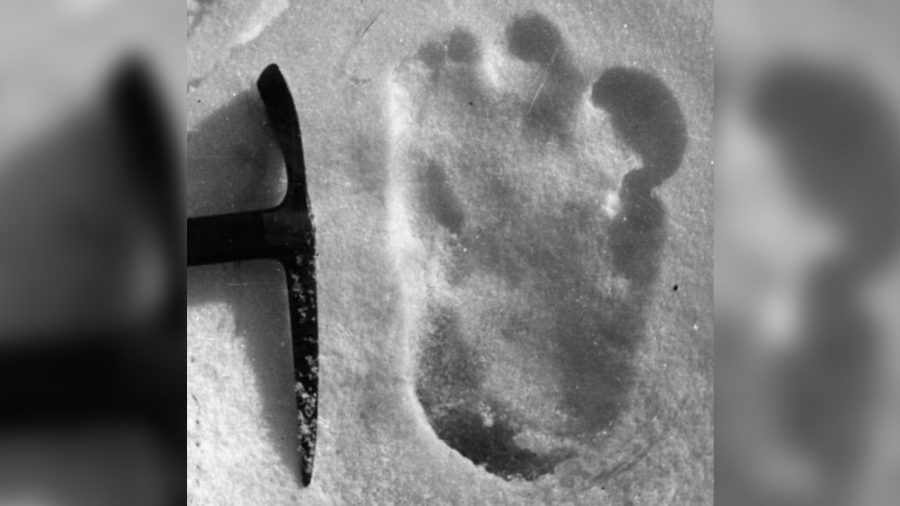
For centuries, humans have been searching for the Yeti—and now, in an unceremonious tweet, the Indian Army is claiming to have found evidence of the mythical Himalayan monster.
On April 29, the official, verified Twitter account of the Indian Army's Additional Directorate General of Public Information tweeted a picture of what it claimed were Yeti tracks in the snow.
The prints allegedly measured 32 inches by 15 inches (81 centimeters by 38 centimeters) and were spotted on April 9 close to Makalu Base Camp, an isolated mountainous area between Nepal and Tibet, the tweet elaborated. "This elusive snowman has only been sighted at Makalu-Barun National Park in the past," the post claimed.
Unsurprisingly, the tweet prompted a flurry of incredulous responses on social media, with many rebuking the Indian military for propagating theories previously debunked by science. Others poked fun at the tweet, with the hashtag #Yeti becoming one of the top Twitter trending topics in India on Tuesday.
The Indian Army provided no further evidence of its find and had not replied to CNN's request for comment by time of publication.
In Nepali folklore the Yeti—dubbed the "Abominable Snowman" in the West—is a furry ape-like creature taller than an average human, which inhabits the Himalayas and other regions.
The Indian Army doesn't usually venture into matters of mysterious monsters—many of its tweets are more mundane, about former army members or public events.
While the latest claim has aroused excitement among Yeti-lovers on social media, it is at odds with scientific findings.
He added that there was a lot of research done on Yeti in the past, and none had proved the creature's existence.
The Yeti became part of local traditions about 350 years ago, when a holy man named Sangwa Dorje took up residence in a cave near the remote village of Pangboche, which had a clear view of Everest. According to local folklore, he was said to have been aided by Yetis and to have kept relics from the beasts.