


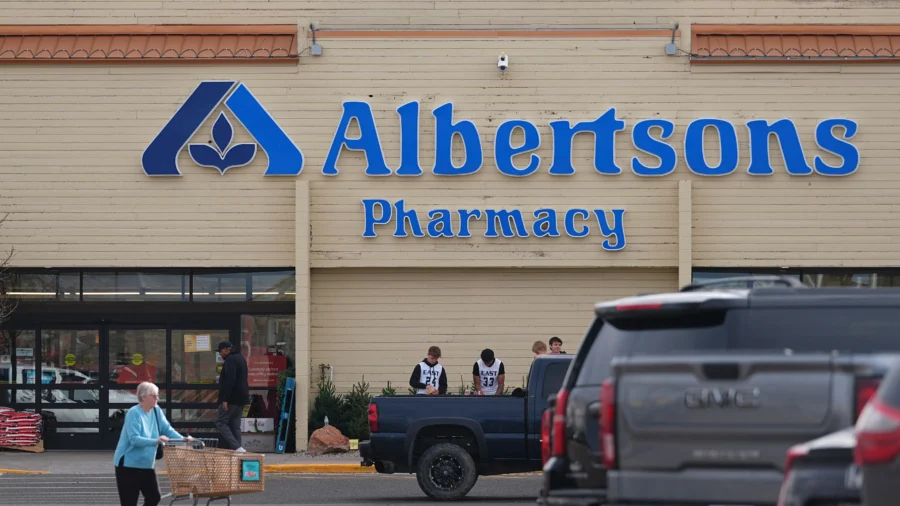
Albertsons has agreed to pay $774 million to settle opioid-related claims, a move the grocery giant said pushed its fourth-quarter results into the red.
The Boise, Idaho-based company on April 13 reported a net loss of $480.8 million for the quarter, compared with net income of $171.8 million a year earlier. The loss was largely driven by a $774 million pretax charge related to the settlement, or about $600 million after taxes.
Albertsons has faced lawsuits alleging that its pharmacy business failed to do enough to curb the overuse of prescription opioids in the United States. The company denied wrongdoing but agreed to the settlement to resolve “substantially all” opioid-related claims brought by state, local, and tribal governments nationwide. Payments under the deal are expected to be spread over nine years.
The company now joins a growing list of major retailers that have settled opioid-related litigation, including Walmart, CVS, Walgreens, and Kroger. Settlement amounts have varied widely, from Kroger’s $47.5 million deal with Washington state to Walgreens’ $5.7 billion payment to California. Rite Aid, which has shut down after a second bankruptcy, filed its initial bankruptcy in 2023 in part because of debts coming from opioid-related lawsuits.
Albertsons said the settlement framework “is in the best interest of all parties.”
Excluding the opioid charge and other items, Albertsons reported adjusted net income of $252 million for the quarter. For fiscal 2025, the company posted net income of $217 million, up 2 percent from the previous year. Full-year net sales rose about 3 percent to nearly $83.2 billion.
The company is operating in an intensely competitive grocery market, with larger rivals including Walmart, Target, and Kroger cutting prices on essential goods to attract increasingly price-conscious shoppers.
“What we’re seeing is increasing pressure on the lower-income cohorts,” CEO Susan Morris said on the company’s post-earnings call. “The middle-income customers remain more stable in terms of the pressures that we’re seeing there, but that said, we recognize our customers are focused on value.”
Morris said Albertsons has tried to shield shoppers from higher food costs and has not passed along roughly 2 percent food-price inflation to customers. She said the company has instead relied on targeted price adjustments in individual markets to improve competitiveness, funding those efforts through productivity gains rather than lower margins.
“Our price position is very different across the country, depending where we’re at, and so that’s a very surgical approach that we take because of that, where we can massage promotional in one area, working on frontline pricing in another,” she said.
Morris also said the company faced what she called a “meaningful sales headwind” from a sharp decline in egg prices over the past year, a trend the company expects to continue into the first quarter of fiscal 2026.