


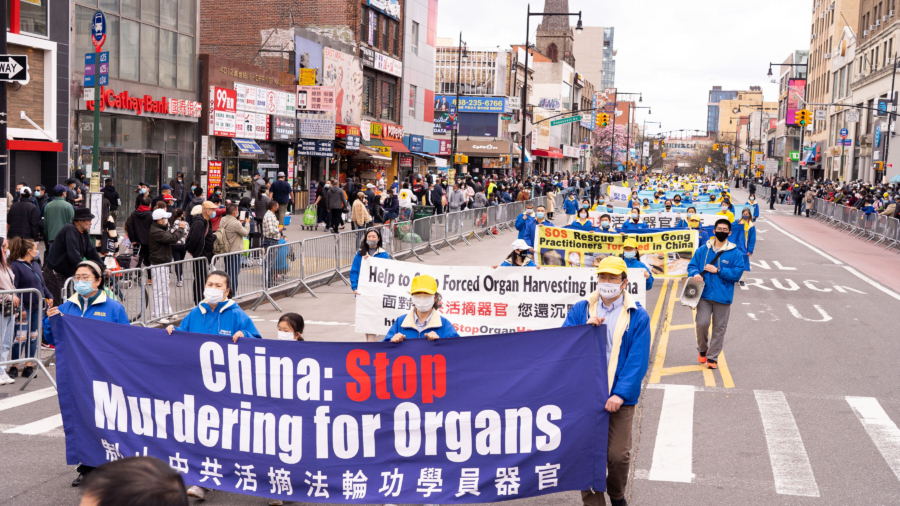
Several politicians from around the world on Sept. 19 took turns in a summit to condemn China’s continued practice of killing prisoners of conscience in order to drive its industrial-scale operations to supply harvested organs to the transplant market.
“Organ donation is a precious act of saving a life, but forced organ harvesting is commercialized murder and without doubt, among the worst of crimes,” said Lord Philip Hunt, a member of the UK Parliament and a former British health minister.
“I hope this event inspires many around the world to take positive action against this crime,” Hunt said.
China has been one of the favored destinations for people in need of organ transplantation due to how quickly Chinese hospitals can find a matching organ—sometimes in days or weeks. Beijing’s explanation for its seemingly ample supply of organs has been that it has a voluntary organ donation system and there are many registered organ donors in China.
What’s more, the tribunal stated it was “certain” that organs were sourced from imprisoned Falun Gong adherents and they were “probably the principal source.”
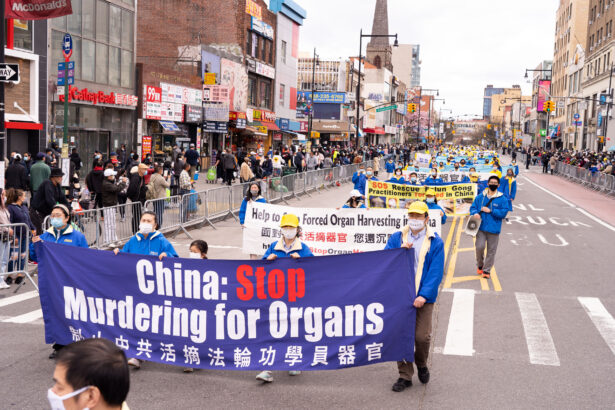
He added the bill would also “protect UK citizens from complicity in forced organ harvesting.”
“My hope that it [the bill] acts as a precedent for further action, both in this country [the UK] and around the world,” Hunt added.
If approved, it would authorize the U.S. government to deny or revoke the passports of people who engage in the illegal purchase of organs. It would also prohibit the U.S. export of organ transplant surgery devices to foreign entities associated with the crime.
“I call on the EU and the U.S. and all other representatives and communities in the free world to stand up for human rights in China, and stop the illegal, inhuman trade of human organs from prisoners of conscience in China,” said Swedish lawmaker Ann-Sofie Alm at the webinar on Sunday.
André Gattolin, vice chairman of France’s Senate Committee on Foreign Affairs, Defense, and the Armed Forces, explained during the webinar that some politicians have chosen to be silent because of China’s threats.
“To question the forced removal of organs in China is obviously to expose oneself to scathing and outraged denials and sometimes even to threats of commercial or political retaliation from Beijing,” Gattolin said.
Gattolin added, “Hence the appalling ‘diplomacy of silence,’ which is far from being confined to France.”
U.S. Rep. Steve Chabot (R-Ohio) called China’s forced organ harvesting “one of the most barbaric practices in human history,” and warned the webinar’s audience of a dark future if the Chinese Communist Party (CCP) was able to export its views on human rights to the rest of the world.
He said: “A world that conforms to the values of the CCP is one in which those who don’t tow the party line can be put in a concentration camp or have their organs harvested.