

A Florida mother is suing a hospital and members of its staff, alleging her 2-year-old son died in their care after being administered a fatal dose of medication.
The lawsuit said that Page brought her son to AdventHealth Ocala Hospital on March 1, 2024, after he experienced persistent crying, diarrhea, and a loss of appetite.
Medical staff diagnosed the toddler with rhinovirus and enterovirus—common respiratory viruses—and found that his potassium level had dropped to 2.8, requiring immediate treatment.
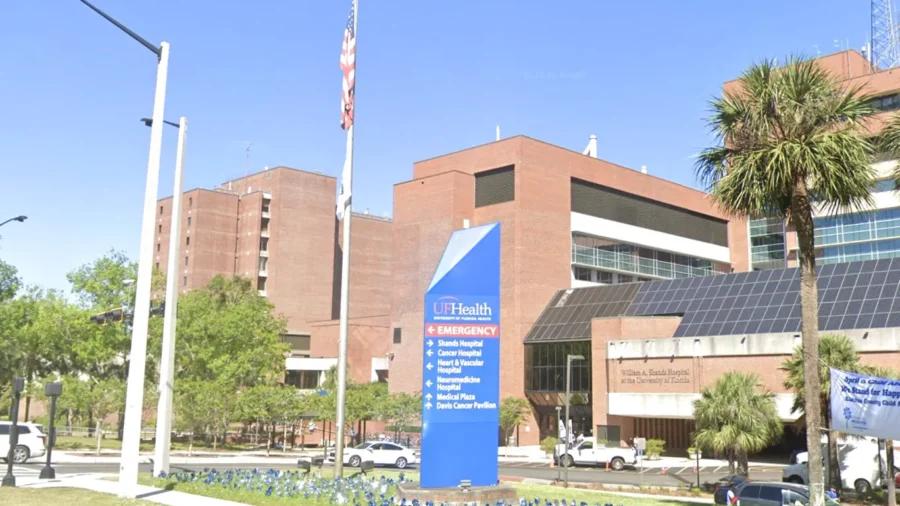
After determining De'Markus required more intensive care, he was transferred to UF Health Shands in Gainesville. When he arrived at the hospital's emergency department the next morning, his potassium remained critically low at 2.9. Doctors admitted him to a general pediatric unit and continued electrolyte replacement therapy.
But the lawsuit claims that staff there “failed to recognise and appreciate De’Markus’ significant critical care requirements, particularly with the ongoing need to provide intravenous potassium replacement therapy to a vulnerable 2-year-old patient.”
The lawsuit then alleges that a physician, Dr. Jiabi Chen, administered a medication dosage that would prove fatal on March 3, 2024. The lawsuit said that Chen ordered oral potassium phosphate at 15 mmol—omitting a decimal point that should have made the dosage 1.5 mmol. The error led to a dose 10 times higher than what De'Markus should have received.
"Because of these errors, De'Markus received two consecutive doses of a massive overdose of oral potassium phosphate," the lawsuit states.
Multiple safeguards failed to catch the mistake, according to the filing. Numerous supervising physicians, along with five pharmacists, all allegedly missed the error despite the hospital's pharmacy system issuing a "Red Flag" warning about the excessive dosage.
De'Markus received the overdose twice that day—once at 2 p.m. and again at 8:28 p.m. Within 30 minutes of the second dose, his potassium level soared to a fatal 7.8, triggering cardiac arrest at 9:02 p.m.
The lawsuit states that efforts to revive De'Markus also faced challenges. Dr. Juan Carlos Gonzalez, an emergency department physician who responded to the code alert, struggled to intubate De'Markus, making at least two to three unsuccessful attempts.
The necessary equipment needed to establish an airway also wasn't readily accessible on the general pediatric floor.
When pediatric critical care physician Dr. Jose Maria Cardenas Fimbres arrived, he and Gonzalez allegedly found that they lacked the proper equipment to secure the child's airway. Only after finding the proper equipment from a critical care unit were they able to complete the intubation.
At least 20 minutes passed from the time the code was called until De'Markus was finally intubated, during which he remained without enough oxygen, the lawsuit states. Although he eventually regained a heartbeat, the prolonged oxygen deprivation had already caused severe brain damage and severe injury to other organs.
The filing says that laboratory tests drawn at 10:36 p.m. confirmed potassium levels at 8.0 and phosphorus at 9.1—both extremely elevated and directly correlating to the overdoses administered earlier. Medical staff treated the hyperkalemia with insulin and dextrose, gradually returning his potassium to normal levels by March 4, 2024.
De'Markus remained on life support for two weeks but showed no signs of improvement. Brain scans revealed irreversible brain damage from oxygen deprivation. His family decided to withdraw life support, and he died on March 18.
NTD News attempted to contact Page but did not receive a response prior to publication.
The lawsuit, filed as a medical negligence and wrongful death suit, alleges the hospital failed to monitor De'Markus properly, place him in an appropriate critical care setting, maintain adequate emergency equipment, and implement safety protocols to prevent medication errors.
The complaint also alleges pharmacy staff failed to follow proper verification procedures despite automated warnings about the dangerous dosage.
The lawsuit names Shands Teaching Hospital and Clinics Inc. and the University of Florida Board of Trustees, both operating as UF Shands Children's Hospital, along with 10 physicians and five pharmacists as defendants.
Page, appointed as personal representative of her son's estate, seeks damages exceeding $50,000 for loss of earnings, medical and funeral expenses, loss of support and services, and mental pain and suffering.
Officials with UF Health Shands declined to comment due to pending litigation when contacted Friday by NTD News.