


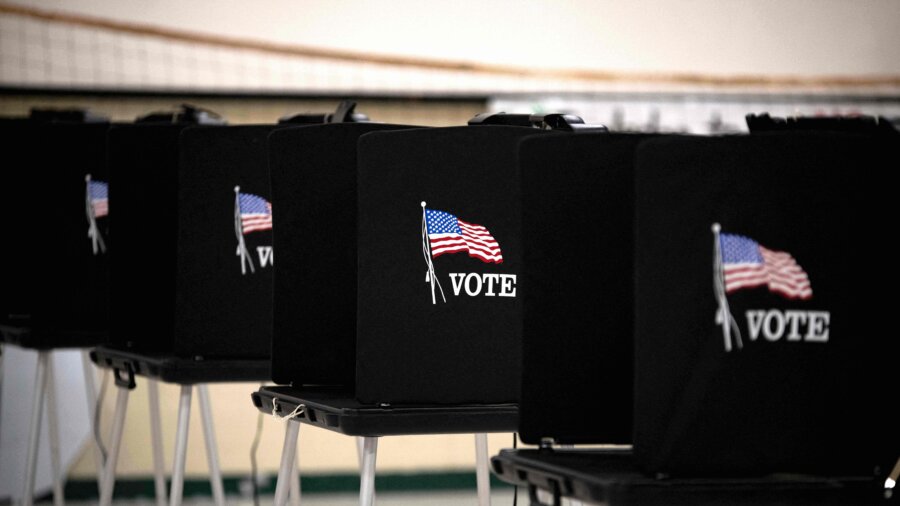
Following oral arguments this week, U.S. District Judge Indira Talwani took requests to halt President Donald Trump’s executive order on creating a national voter identification list under advisement.
Talwani is poised to decide whether the federal government's aim to build a national voter database will be paused or if the complaints challenging Trump’s order will be dismissed entirely.
Based on her questions in the courtroom, Talwani appeared to be leaning towards putting the order on hold.
“What’s the harm if I say no one can use this list for the November election?” said Talwani, who was appointed by former President Barack Obama to the U.S. District Court for the District of Massachusetts federal bench.
Also known as "Presidential Executive Order 14399", it aims to prevent purported fraud in federal elections by tasking certain federal agencies with creating a nationwide database of eligible voters.
Talwani wondered aloud whether a federal database could overlook eligible women voters who changed their names after marriage or American citizens who moved across state lines.
“Isn’t there a reasonable fear and concern on behalf of voters that they will be precluded?” Talwani said.
Two sets of plaintiffs sued the president over the same executive order. One lawsuit is California v. Trump, and the second is League of Women Voters v. Trump. Talwani consolidated them into a single action.
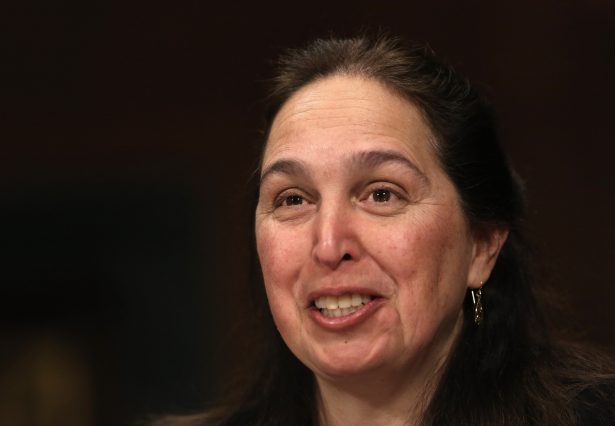
The plaintiffs argued on June 2 before Talwani that the order undermines the state’s power to set its own election rules
“This is going to be a sea change in the way that some states administer their ballots,” said Michael Cohen, an attorney representing the state of California. “It will be difficult to overstate the disruption that this will cause.”
The attorney representing the Trump administration, Stephen Pezzi, argued that the plaintiffs lack standing under the Administrative Procedure Act (APA) and, as a result, their complaints should be dismissed.
The APA mandates how federal agencies develop and issue regulations.
The U.S. Postal Service has begun implementing the president’s order with a proposed rule that is currently open to comments.
After the Domestic Mail Manual is amended and approved, the postal service would track and verify mail-in ballots as they move through its system by establishing a process in which each state uploads its voter data to a federal portal.
Using a Federal Ballot Mail Portal, the agency would oversee the mandatory tracking system, with unique, serialized Intelligent Mail barcodes (IMb) printed on the outbound envelope sent to the voter and the return envelope sent back to the election office.
The postal service requirement would apply only to states that choose to use the U.S. Mail for absentee or mail-in voting in federal elections.