


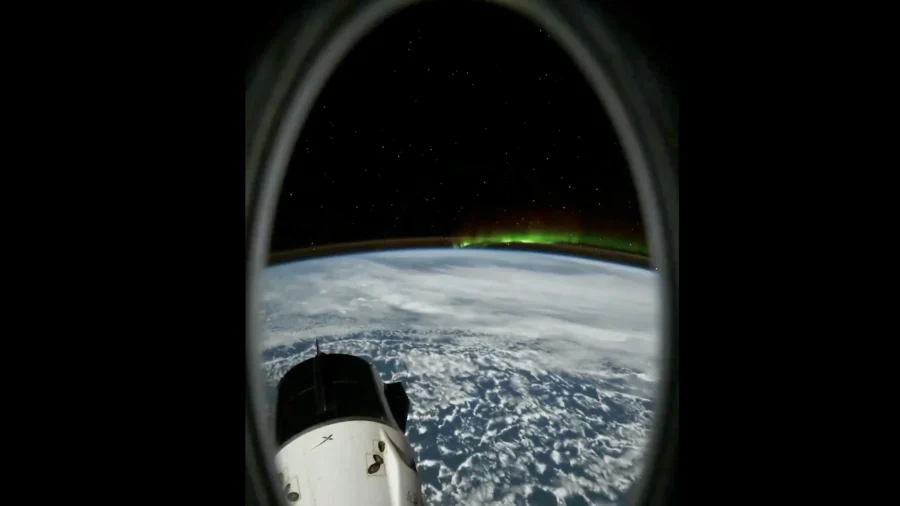
NASA astronaut Zena Cardman recently shared breathtaking time-lapse footage of auroras captured from the International Space Station (ISS), providing an extraordinary perspective of Earth's natural light phenomenon from approximately 250 miles above the planet's surface.
"I don't have words yet for the whole experience, so a picture will have to do," she wrote.
The 40-second timelapse showcases what appears to be the aurora australis, or southern lights, dancing over the South Pacific Ocean. The footage also captures the rising Orion constellation and distant satellites, providing what Cardman described as a "wild new perspective."
Auroras are natural light displays in Earth's sky that appear as rays, spirals, and flickers, typically manifesting in vibrant red and green hues.
According to her post, she recorded the time-lapse aboard the SpaceX Dragon capsule that returned to Earth several days later, carrying four Crew-10 astronauts, who had completed their 148-day space station mission. The capsule splashed down off California's coast on Aug. 9.
"That Dragon undocked and returned to Earth a few days ago with Crew-10," Cardman reflected. "It was a bittersweet farewell but marked the start of a new chapter in what feels already like a great story."
Acting NASA Administrator Sean Duffy said, "The agency's SpaceX Crew-11 mission to the space station is the first step toward our permanent presence on the Moon."
The mission represents part of NASA's Commercial Crew Program, which, according to the agency, provides reliable space access while maximizing the station's research and development potential and supporting future missions beyond low Earth orbit through partnerships with private companies.