


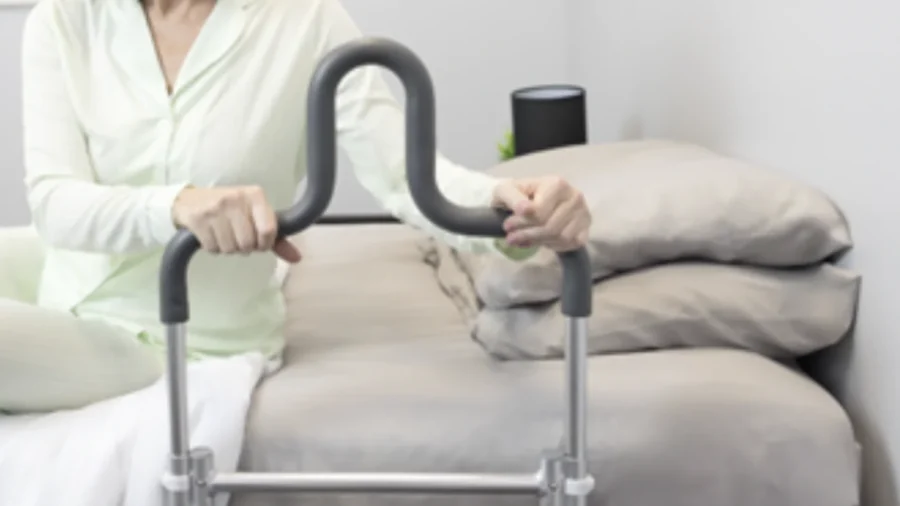
The CPSC warns that the rails pose a risk of entrapment and asphyxiation, with the user potentially becoming trapped between the rail and mattress or inside the rail itself. The recall covers three different Vive Health bed rail models.
Vive Health has reported two deaths linked to one of its recalled bed rail models. In September 2024, a 97-year-old man in a Texas assisted living facility, and a 93-year-old man at his Florida home died after becoming trapped.
The recall covers about 122,000 Vive Health bed rails, including the Compact Bed Rail in model LVA2009SLV, Bed Rail Collection V in model LVA2097SLV, and certain units of model LVA1024 bought on or before Aug. 21, 2023.
The rails were sold nationwide at medical supply stores and online, including vivehealth.com and Amazon, from September 2019 through December 2025. Prices ranged from $45 to $90. All recalled bed rails were made in China.
Consumers are asked to stop using the recalled products immediately and contact Vive Health for a full refund.
Another Product Recalled Over Safety Concerns
Separately, the CPSC announced on March 26 that about 200 MPINOI adult portable bed rails were recalled for posing a serious entrapment hazard that could result in death by asphyxiation.The agency said the rails violate federal safety standards because the recalled units lack required hazard warning labels, and users can become trapped between the rail and the mattress.
The recalled bed rails were sold on Amazon from December 2025 to February 2026 for about $30. No injuries have been reported. Consumers are urged to stop using the rails and contact Guangzhou Aoran Trading Co., Ltd., doing business as Bioenrrty, for a full refund.
"It is important to consider whether or not a bed rail product is appropriate when creating a safe sleeping environment that accounts for medical needs, comfort, and desire for freedom of movement," states the FDA.
Alternatives such as roll guards, foam bumpers, or lowering the bed are recommended if the rails are unsafe. The FDA also stresses that close supervision is critical to prevent injuries.