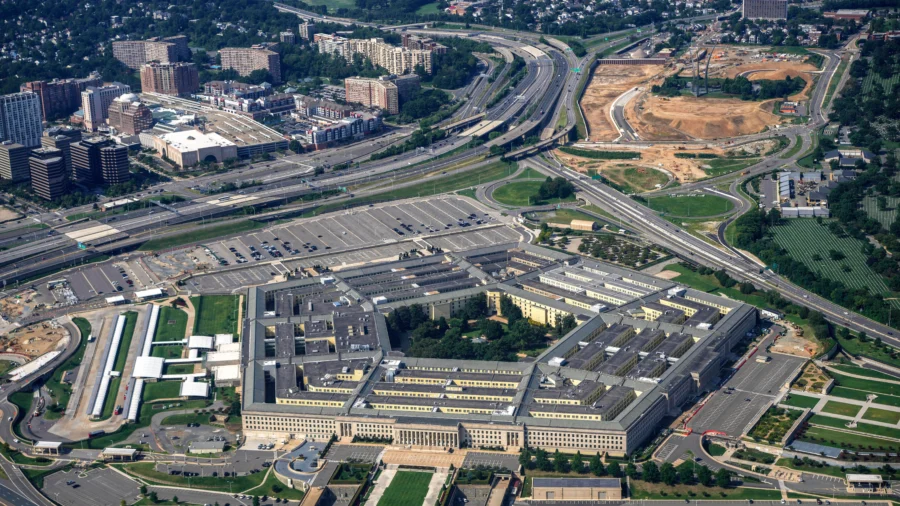
Despite repeated calls to expand the Pentagon’s China military-linked companies list, no new names have been added. China could have breathed a sigh of relief until Congress passed the 2026 defense bill in December, setting the stage for tighter rules on venture capital and corporate investment next year.
U.S. companies invested in China continue getting poked at by the Pentagon and Capitol Hill. Last year ended with the Pentagon
asking to add Alibaba, Baidu, and Chinese automaker BYD to a blacklist of companies known as the dreaded
1260H List. That addition was suggested in October, but nothing ever came of it.
On Dec. 18, 9 Republican lawmakers from the House and Senate wrote a
letter to Department of War Secretary Pete Hegseth asking him to add China’s AI giant DeepSeek, smartphone maker Xiaomi, and pharmaceutical services company Wuxi AppTec to the 1260H. There were 16 other companies listed as well, but those are the most well-known.
The 1260H list has not been updated in quite a while, not during the current Trump administration, where the list kicked off in earnest during his first term and expanded upon during the Biden presidency. The 1260H list just means no U.S. defense contractor working on projects with the Pentagon can use those companies’ products, leaving non-government contractors, retail consumers, and Wall Street free to buy and invest.
In fact, even with Alibaba in Washington’s crosshairs, JP Morgan bought nearly seven million shares as of Dec. 31 for one of their mutual funds, according to Morningstar
data. Fund managers Janus Henderson and T. Rowe Price also increased their Alibaba investments in December and January. Cathy Wood’s Ark Invest asset management firm bought over 430,000 shares of Baidu as of Dec. 31,
according to Morningstar.
For Wall Street, the only China blacklist that matters is the one run by the Treasury Department’s Office of Foreign Assets Control (OFAC). There are dozens of companies on that list, officially called the
Non-SDN Chinese Military-Industrial Complex Companies List. The list has not seen any additions to it since 2021.
Washington lawmakers
keep issuing warnings about Wall Street financing China’s military-linked firms—but stop short of taking any action that would actually interrupt capital flows. There has been debate in Capitol Hill hearings in the House and Senate where members consider ways to stop U.S. investment firms, including private equity and Silicon Valley venture capitalists, from funding China’s rise in advanced technology, let alone military equipment. But since the initial China names were put on the 1260H list and OFAC’s now 5-year-old list, no new names have been added.
The letters keep coming, and while this may spook China, it has not spooked Wall Street too much yet.
For example, last April, Rep. John Moolenaar (R-Mich), chairman of the House Select Committee on China, sent separate
letters to JPMorgan Chase & Co. CEO Jamie Dimon and Bank of America CEO Brian Moynihan
demanding they withdraw as underwriters for the initial public offering (IPO) of Contemporary Amperex Technology Co., Limited (CATL), the largest EV battery maker in the world. CATL is on the 1260H list, which has no impact on U.S. investment. The banks continued as underwriters.
In practice, many lawmakers appeared to be urging Wall Street to comply with a restriction that does not yet exist—or, failing that, to voluntarily align itself with a more moralized view of U.S.–China economic engagement.
Wall Street is getting a pass. Private capital, on the other hand, will face more restrictions.
Newest NDAA Adds New Risks to Private Capital
The
2026 National Defense Authorization Act (NDAA), passed into law in December, adds new risk to corporate and private capital thinking about investing in certain types of Chinese companies. The NDAA requires changes to the Treasury Department’s
outbound investment rule, which currently restricts certain investments by Americans into China. The main change for China comes in the NDAA provision known as the
COINS Act. This will expand prohibitions and notification requirements for companies, private equity, and venture capital looking to invest in Chinese hypersonic systems, high-performance computing, advanced semiconductors, microelectronics, quantum computing, and artificial intelligence. The Treasury’s regulations are expected to specify the parameters of these technologies by March 2027. That’s when things change for investors in those targeted sectors.
Rep. Andy Barr (R-Ky.) said in a
press release that, “U.S. investors continue to be the primary source of global investment capital into the technology sectors in China at the heart of the U.S.-China economic competition.”
The investors the NDAA goes after are the real money investors, companies that are building wealth by putting money to work to help China grow.
Senate Majority Leader Chuck Schumer (D-NY) said in a
statement published after the NDAA was
signed by Trump that it is “vital that we continue to prevent the harmful flow of U.S. investment into China.” And as another example of bipartisan voices, Sen. Elizabeth Warren (D-Mass.) noted in the same press release that the changes at Treasury will eventually make it harder for companies to invest in key sectors of the Chinese advanced technologies economy.
“Our bipartisan bill will help ensure that we develop the most sensitive and cutting-edge technology here in America rather than supercharge its development in countries that do not share our values,” Warren said.
The COINS Act has no immediate impact on Wall Street. The Treasury will issue new regulations or update its outbound investment rule by March 13, 2027.
Publicly traded securities are
exempt and will not be restricted. The new law would not have banned JP Morgan from underwriting the CATL IPO.
Meanwhile, the companies listed in the Dec. 18 letter to Hegseth still count on American investors, large and small.
Some names in that letter and the funds that own them include
Wuxi AppTec. Fidelity owns over 23 million shares as of Dec. 31, according to Yahoo! Finance;
Hua Hong Semiconductor, Invesco, and BlackRock own over 7 million shares each in ETFs;
Xiaomi Corporation stocks in Hong Kong are held by the tens of millions by BlackRock, Fidelity, and State Street Bank; and
Genscript Biotech is also part of Fidelity and BlackRock ETFs.
There is no single official U.S. dataset that cleanly breaks U.S. investors’ China equity exposure into U.S. listed shares versus those listed in Hong Kong, Shanghai, or Shenzhen. A Goldman Sachs estimate last year suggests that China exposures are mostly skewed toward China exchanges rather than Chinese companies listed here. According to Goldman Sachs estimates reported in April 2025, U.S. institutional investors hold around $830 billion in Chinese equities. Of that total, only about $250 billion is invested in Chinese companies listed on U.S. exchanges. Some members of Congress have tried to make it harder for Wall Street to invest in Chinese stocks listed in China, but those bills are either stuck in committee or failed to pass through to a floor vote.