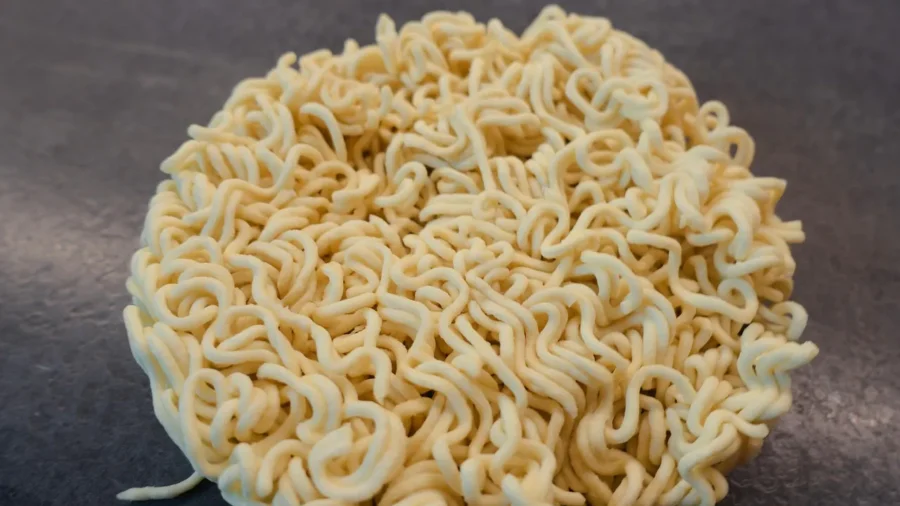
The U.S. Food and Drug Administration (FDA) issued an alert about the voluntary recall of ramen noodles.
Concerns about undeclared soy led Kobayashi Noodle U.S.A. of Gardena, California, to voluntarily recall 3,745 cases of Raw Ramen Noodle, according to an Aug. 18 FDA
advisory.
“Ramen Noodle package label does not declare Soy as the source for lecithin ingredient,” the FDA said.
Company leaders did not respond to requests for comment.
There are nine major food allergens that the
FDA requires all companies to identify in their products. They include milk, eggs, fish, shellfish, tree nuts, peanuts, wheat, soybeans, and sesame.
“In my experience, such recalls are triggered by supplier notifications or even routine product testing,” Northeastern University professor, food safety expert, and Alliance for Recall Ready Communities adviser Darin Detwiler told NTD. “The most common situations are consumer reports of allergic reactions or noticing undeclared allergens on the ingredient list.”
The recalled pasta was distributed in California in two batches of 945 cases and 2,800 cases.
The FDA designated the recall a Class 2 event, which is the federal government’s second-highest risk alert and is described on the FDA
website as exposure to a product that may cause temporary or medically reversible adverse health consequences.
A Class 1 event is the FDA’s highest risk alert and is described on the FDA
website as having a reasonable probability that the use of or exposure will cause serious adverse health consequences or death, while Class 3 involves products that violate regulations but are unlikely to cause health problems, such as minor labeling errors.
Lot numbers under recall are 911, 916, 919, 932, 935, 940, 945, 950 and 893, 894, 897, 898, 899, 900, 901, 902, 903, 904, 905, 906, 907, 910, 912, 913, 914, 915, 916, 917, 918, 921, 922, 923, 924, 925, 926, 927, 928, 929, 930, 933, 934, 936, 937, 938, 939, 940, 942, 943, 946, 947, 948, 949, and 951.
Food recalls have been on the rise in recent years. A Trace One
study found U.S. food recalls increased by 15 percent in the past five years.
Undeclared allergens accounted for nearly 40 percent of all recalls, foreign object contamination accounted for 11.6 percent, bacterial contamination accounted for 21.1 percent, and lead contamination accounted for 1.7 percent, according to the study.
When purchasing store-bought, pre-packaged food items, food industry expert and Fruit Slabs CEO Brandon Dorsky advises sensitive individuals to always carry antihistamines and an Epi-Pen to best protect themselves from food contamination and improper labeling.
"If you are food sensitive and eating with a friend, you can always have your friend or colleague sample food," Dorsky told NTD. "There are also some new drugs available on the market that food-sensitive individuals can take in advance of consuming food that may contain allergens and that can help protect against or avoid the most severe allergic reactions."