


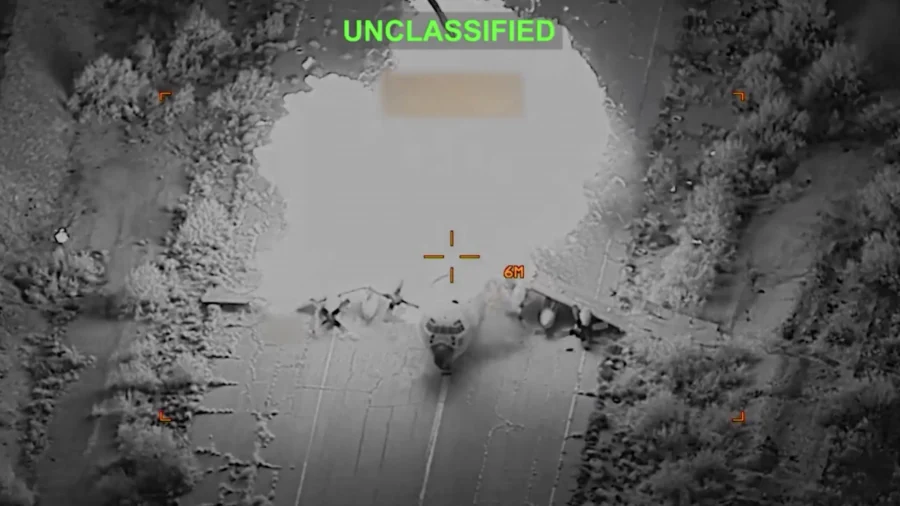
The U.S. military said Wednesday it has struck more than 10,000 Iranian military targets and destroyed the vast majority of Iran's largest warships since Operation Epic Fury began on Feb. 28.
"Those days are over," Cooper said of Iranian warships that for decades had roamed regional waters, threatening and harassing global shipping. "My operational assessment is that they've now lost the ability to meaningfully project naval power and influence around the region and around the world."
Cooper added that Iran's drone and missile launch rates have plummeted by more than 90 percent, severely limiting Tehran's capacity to strike American forces or neighboring countries. Beyond that, he said U.S. strikes have damaged or destroyed more than two-thirds of Iran's missile, drone, and naval manufacturing facilities and shipyards—facilities that had previously been used to build and proliferate weapons technology to what he called "regional and global bad actors."
"My operational assessment continues to be Iran's combat capability is declining as U.S. combat capability continues to increase," Cooper said.
White House: Ongoing Talks With Iran
In response to Iran’s rejection of the U.S. proposal to end the war, White House press secretary Karoline Leavitt said on Wednesday: “Talks continue. They are productive, as the president said on Monday, and they continue to be.”Leavitt cautioned reporters against writing about a 15-point cease-fire proposal that had circulated in media reports, saying the plan had been mischaracterized.
"I would caution reporters in this room from reporting about speculative points or speculative plans from anonymous sources," Leavitt said. "The White House never confirmed that full plan. There are elements of truth to it, but some of these stories I read were not entirely factual."
The proposal had been sent to Iran through Pakistan late Tuesday but was rejected. Leavitt declined to say which specific elements of the reported plan were inaccurate, and she offered no new details about the state of negotiations.
Iranian Foreign Minister Abbas Araqchi said on Wednesday while there had been no dialogue or negotiation with the United States, various messages had been exchanged through intermediaries.
"Messages being conveyed through our friendly countries and us responding by stating our positions or issuing the necessary warnings is not called negotiation or dialogue," Araqchi said in a state television interview.
U.S. President Donald Trump, speaking later on Wednesday at an event in Washington, said Iranian leaders "are negotiating, by the way, and they want to make a deal so badly, but they're afraid to say it because they will be killed by their own people. They're also afraid they'll be killed by us."
Trump has not identified who the United States is negotiating with in Iran, with many high-ranking officials among the thousands of people that killed across the Middle East since the United States and Israel attacked Iran on Feb. 28. Iran has since launched strikes against Israel, U.S. bases and Gulf states.
Iran's new supreme leader, Ayatollah Mojtaba Khamenei—named to replace his slain father, Ali Khamenei—has not been seen or heard from publicly since assuming the position, leaving it unclear who in Iran's regime holds the authority to negotiate.
"It starts with no nuclear weapons. And they've agreed to that," Trump told reporters in the Oval Office. "They're not gonna have enrichment, any of those things."
Trump also suggested that Iran's new leadership had offered the United States a "very significant prize" tied to energy access and the Strait of Hormuz—the strategically critical waterway through which a significant portion of the world's oil flows—and expressed confidence that U.S. officials were speaking with "the right people" to broker an end to the conflict.
Leavitt warned, however, that the window for diplomacy could close. She said the "remaining elements of the Iranian regime" still had the opportunity to cooperate following Trump's weekend ultimatum threatening to "obliterate" Iran's power plants if the country did not relinquish its grip on the Strait of Hormuz.
"There does not need to be any more death and destruction," Leavitt said, "but if Iran fails to accept the reality of the current moment, the president will ensure they are hit harder than they have ever been hit before."