


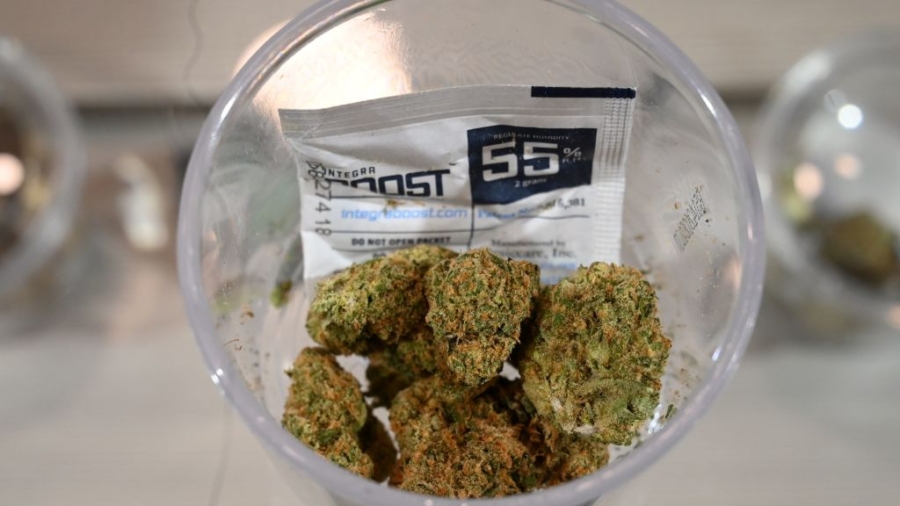
Younger people with marijuana addiction are at an increased risk of heart rhythm problems, according to a new presentation at the American Heart Association Scientific Sessions. A second presentation says that young people who use weed frequently are at a higher risk for stroke.
In that data, 2.6 percent of patients hospitalized for a heart arrhythmia were regular marijuana users. These patients tended to be younger, between the ages of 15 and 24, male and black.
Adjusting for other factors, 15- to 24-year-old marijuana users had 1.28 times higher odds of having to go to the hospital for this heart problem and 25- to 34-year-olds faced 1.52 times higher odds.
"The effects of using cannabis are seen within 15 minutes and last for around three hours. At lower doses, it is linked to a rapid heartbeat. At higher doses, it is linked to a too-slow heartbeat," Dr. Rikinkumar S. Patel, resident physician in the department of psychiatry at the Griffin Memorial Hospital in Norman, Oklahoma, said in a press release.
"The risk of cannabis use linked to arrhythmia in young people is a major concern, and physicians should ask patients hospitalized with arrhythmias about their use of cannabis and other substances because they could be triggering their arrhythmias."
For that study, researchers looked at data from 43,000 adults who were a part of the behavioral risk factor surveillance system between 2016 and 2017. The participants were between the age of 18 to 44, and 14 percent said they had used marijuana in the last 30 days. Those who said they used the drug were typically younger, male, and Hispanic or African American.
This was an observational study and did not look at what might cause the increased risk. But authors hope doctors will take the information into account when they talk to their patients.
"Physicians should ask patients if they use cannabis and counsel them about its potential stroke risk as part of regular doctor visits," co-author Tarang Parekh, a health policy research at George Mason University, said in a statement.
With the legalization of marijuana in several states, researchers said they hope more scientists will look into any potential health risks as the use of the drug becomes more widespread.
At the federal level, industrial hemp was legalized by the Trump administration on Dec. 20, 2018, allowing farmers to cultivate hemp crops with less than 0.3 percent concentrations of the intoxicating psychoactive compound delta-9-tetrahydrocannabinol (THC).
While marijuana and hemp are both a type of cannabis plant, there can be key health differences. Marijuana can contain up to 30 percent THC. Conversely, hemp crops can be cultivated to have the less than 0.3 percent THC concentration. This results in more Cannabidiol (CBD), which is the compound that is associated with the medical benefits from cannabis.
