


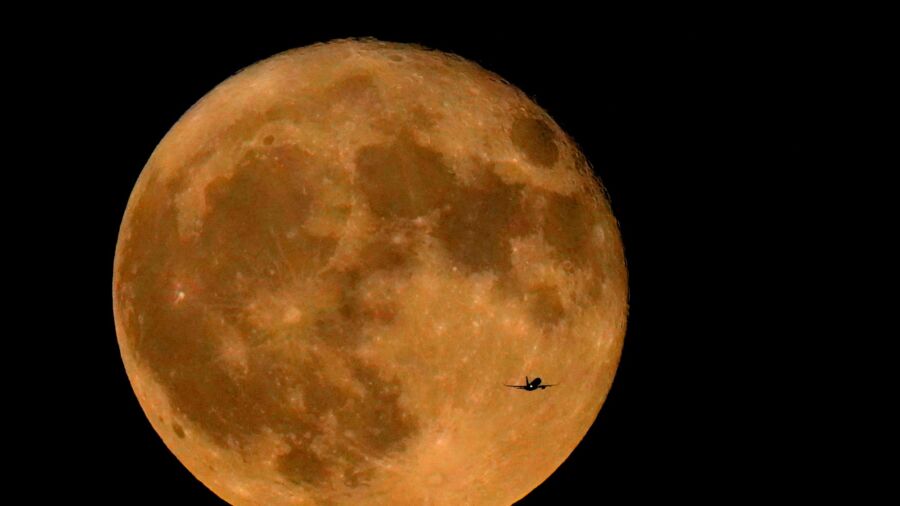
July’s full moon, known as the Buck Moon, rises on the evening of Thursday, July 10, and it’s expected to appear especially large and low in the sky.
Although the Buck Moon reaches peak brightness at 4:37 pm EDT, it won’t be visible until after sunset, when it rises above the southeastern horizon.
Due to the full moon’s brightness, most nearby stars will be washed out. The glowing moon takes center stage in the southern sky. As EarthSky notes, the moon returns to this part of the sky each year “not by chance, but by the rhythms of Earth and sky.”
Why Is It Called the Buck Moon?
According to the Old Farmer’s Almanac, the name "Buck Moon" comes from Native American, Colonial American, and European traditions. In July, male deer, called bucks, are growing new antlers in full force, which is considered a symbol of seasonal renewal. These antlers fall off and regrow annually, becoming larger with each cycle.- Salmon Moon, for the fish runs in the Pacific Northwest
- Feather Moulting Moon, marking a seasonal molt for many young birds
- Berry Moon, Raspberry Moon, and Chokecherry Moon, tied to summer berry harvests
- Thunder Moon, referencing July’s frequent storms
- Halfway Summer Moon, highlighting the season’s midpoint
There are only five more full moon’s in 2025 following the Buck Moon. The next full moon is the Sturgeon Moon on Saturday, Aug. 9. After that, the next full moons are the Corn Moon on Sept. 7, the Hunter’s Moon on Oct. 6, the Beaver Moon on Nov. 5, and the Cold Moon on Dec. 4.