

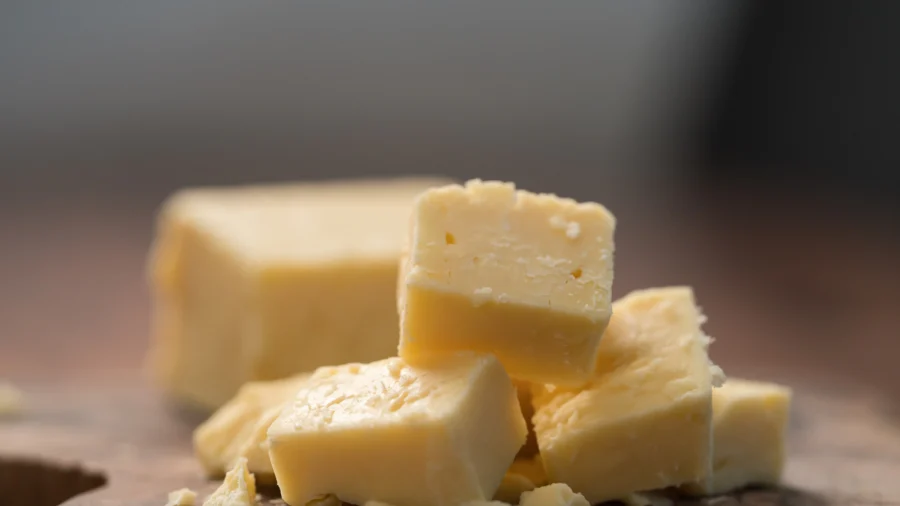
The U.S. Food and Drug Administration (FDA) assigned its highest risk warning this week to a recalled dairy product sold in Michigan.
The Nov. 16 recall applies to 35 wholesale cases containing 12 retail units of 8-ounce packages that have the product code UPC 8 50056-64205 7 printed on them.
Boss Dairy Farms company management did not respond to NTD's requests for comment by the time of publication.
"Level 1 recalls are done out of an abundance of caution because the consumption of the product could cause serious health issues, or even death," Mendocino Food Consulting founder Bryan Quoc Le told NTD.
A Class 2 event is described on the FDA website as exposure to a product that may cause temporary or medically reversible adverse health consequences, while a Class 3 event involves products that violate regulations but are unlikely to cause health problems, such as minor labeling errors.
The FDA website describes Lm as an organism that can cause serious and sometimes fatal infections in young children, frail or elderly people, and others with weakened immune systems.
Peaches
Last month, multiple food companies initiated voluntary recalls of peach salsa due to potential contamination with Lm.Two additional companies—Supreme Produce LLC and JFE Franchising Inc.—subsequently initiated their own recalls of peach salsa products containing the potentially contaminated fruit. All of the affected items were distributed through Kroger stores in multiple states.
The recalls stemmed from California-grown peaches that may carry the pathogen.
"We are seeing more and more Listeria cases lately, and it's not necessarily because food is less safe nowadays, but more because there are new and better detection technologies and, while that's good for consumers, it also exposes gaps in process control," Source86 CEO Eran Mizrahi told NTD. Source86 is a global sourcing provider in the food industry.